A Risk That Didn’t Go as Planned
In 2010, Reshma Saujani made a bold move. She became the first Indian-American woman to run for U.S. Congress, stepping into a competitive New York City race with zero political experience. Her campaign was passionate, hopeful, and authentic—but she lost. Publicly. Loudly. Painfully. For many, that would have been the end of the story. But for Reshma, the loss became the starting point for something bigger.
Discovering a Problem Hiding in Plain Sight
While campaigning, Saujani visited hundreds of schools. She noticed something troubling: classrooms full of smart girls avoiding computers, coding, or anything technical. It wasn’t about skill. It was about confidence. Girls were taught to be perfect. Boys were taught to be brave. That disconnect sparked a new mission in her mind: What if failure wasn’t something to fear—but something to teach?
Starting a Movement From Scratch
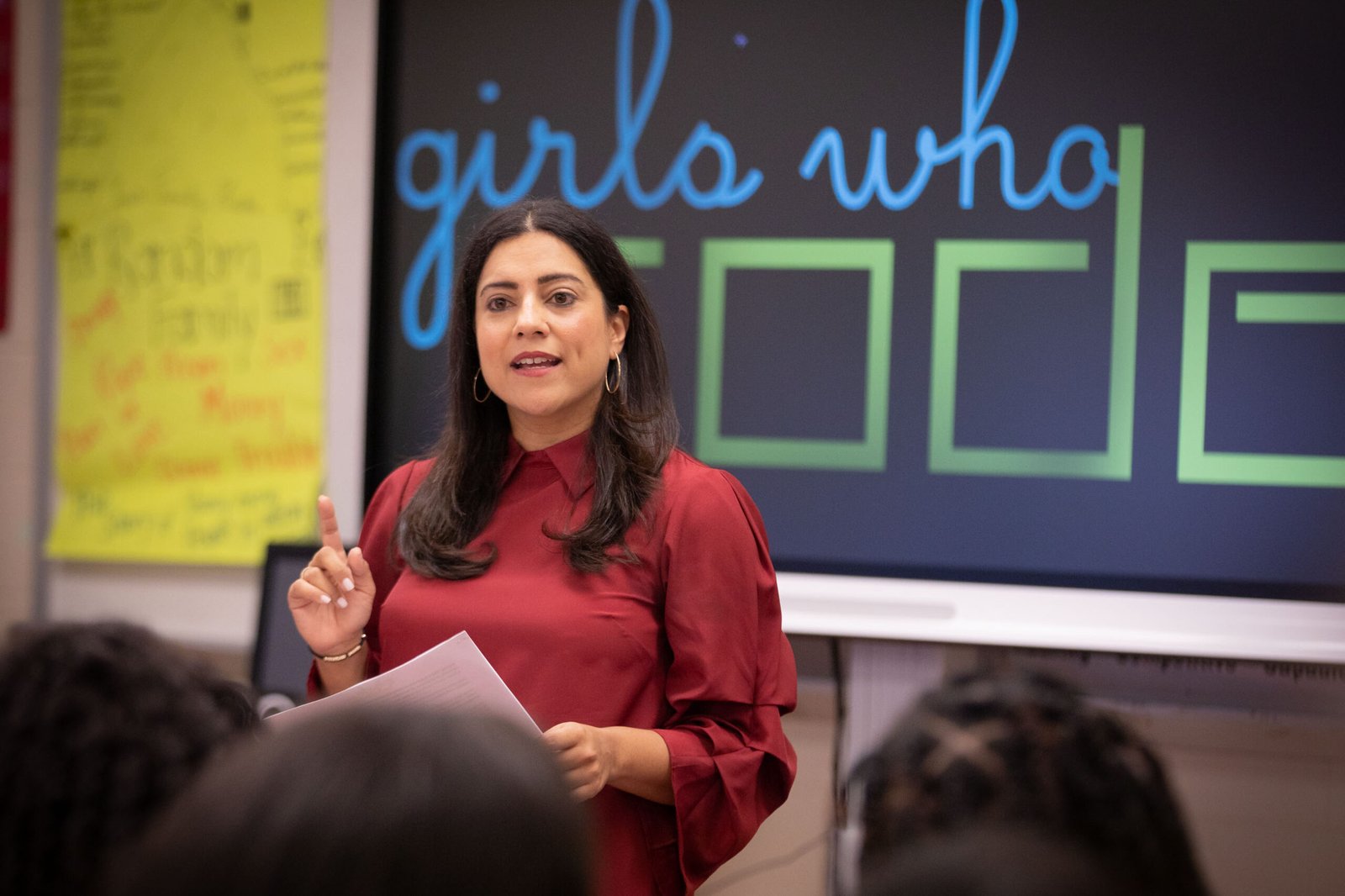
In 2012, Reshma founded Girls Who Code, a nonprofit with a clear purpose: close the gender gap in technology by teaching young girls to code—and to be brave enough to try. She started with one small classroom and a handful of students. But the idea resonated fast. Girls Who Code grew into a national program with after-school clubs, summer programs, and partnerships with major tech companies. And it all started with the lessons she learned from losing.
Teaching Bravery Over Perfection
Saujani didn’t just teach Python or JavaScript—she taught mindset. She encouraged girls to take risks, debug errors without shame, and see failure as a learning tool. In her TED Talk and bestselling book Brave, Not Perfect, she explained how perfectionism holds girls back from trying new things. Her goal was cultural change. She wanted a world where girls could fail loudly, bounce back quickly, and keep building anyway.
Growing Into a Global Impact
Today, Girls Who Code has reached over 500,000 young women around the world. Many of them are now working in tech companies, launching startups, or building software that matters. Saujani has become a national advocate for equity in STEM, testifying before Congress and advising major institutions. But at her core, she’s still driven by the same belief: failure isn’t the opposite of success—it’s the foundation of it.
Taking on Bigger Conversations
Reshma didn’t stop with coding. She expanded her advocacy to include workplace policies, motherhood, and leadership. She launched the Marshall Plan for Moms to fight for paid leave and better care infrastructure. Her focus shifted from teaching bravery to young girls—to building systems that support women at every life stage. She’s no longer just a nonprofit founder—she’s a changemaker in business, tech, and policy.
A New Definition of Success
Reshma Saujani’s story shows that failure can lead to your life’s work. Losing her election didn’t close a door—it opened her eyes to a much deeper problem, and gave her the courage to solve it. Her legacy is not just in the code girls are learning—but in the confidence they’re gaining by learning it. She proved that the setbacks we fear most can become the spark that fuels our greatest impact.