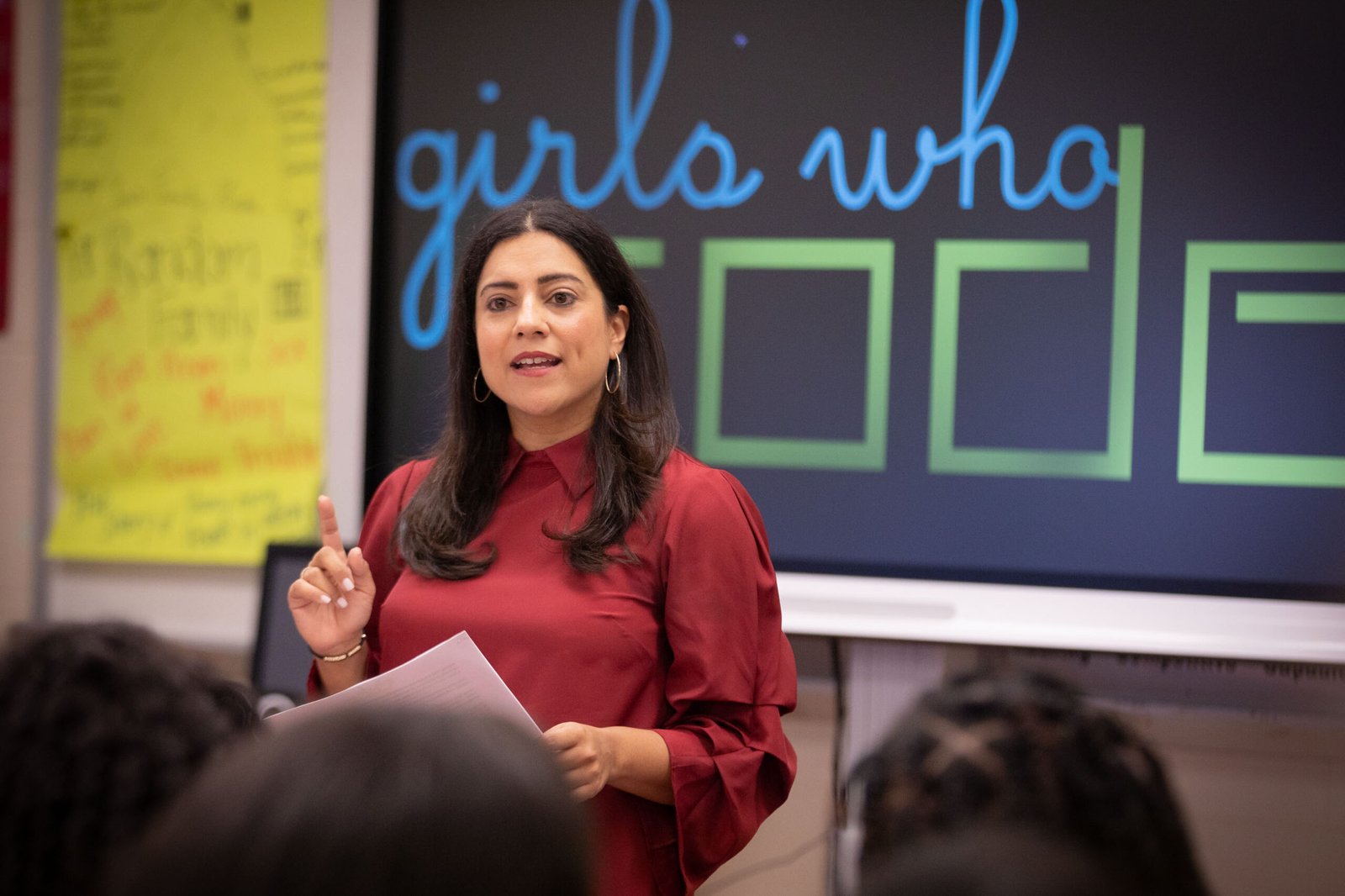
Leading From the Front—Then Facing the Limits
Reshma Saujani founded Girls Who Code in 2012, aiming to close the gender gap in technology. Under her leadership, the non-profit grew from a bold idea into a national movement—empowering thousands of young women to learn programming and consider careers in tech. But as the organization scaled, she began to see that traditional founder-led leadership might limit long-term impact.
Realizing Growth Demands Change
By mid-2020s, Girls Who Code had reached hundreds of clubs, partnered with major tech companies, and influenced policy. Yet Saujani felt a rising tension: the systems that made early growth possible weren’t always the best for sustainable change. She noticed that decisions were too centralized, and the organization risked stagnating under one leadership style.
Stepping Aside With Purpose
In 2017, Saujani made the deliberate choice to step back from day-to-day leadership. The move wasn’t a retreat—it was a strategic pivot. She wanted to ensure the organization would thrive beyond her personal vision. By hiring new executives with complementary skills and diversifying leadership, she aimed to build a team capable of sustaining mission impact long term.
Pioneering a New Leadership Model
Saujani’s approach challenged the typical founder narrative. Instead of clinging to control, she formalized shared decision-making structures and governance models to support continued growth. She also advocated publicly for founder transitions, showing how stepping aside can be a powerful act of stewardship—not weakness.
Continuing to Lead From Afar
Though no longer CEO, Saujani didn’t walk away. She shifted her focus toward thought leadership, writing books like Brave, Not Perfect, mentoring social entrepreneurs, and expanding her impact through speaking engagements. By doing so, she reinforced that leadership isn’t a role—it’s a principle that can be practiced in many forms.
Building Legacy Through Succession
Today, Girls Who Code continues to grow under its next-generation leadership—expanding internationally and deepening its curriculum. Saujani’s early decision to rethink her role created space for fresh perspectives, innovation, and resilience—ensuring the organization stays rooted in its mission even as it evolves.
Conclusion
Reshma Saujani’s decision to step down wasn’t a pause—it was a redefinition of leadership. She demonstrated that thoughtful succession and shared governance are vital to sustaining impact. By choosing purpose over presence, she built a legacy that transcends the limitations of any single leader—and inspires the next wave of changemakers.